


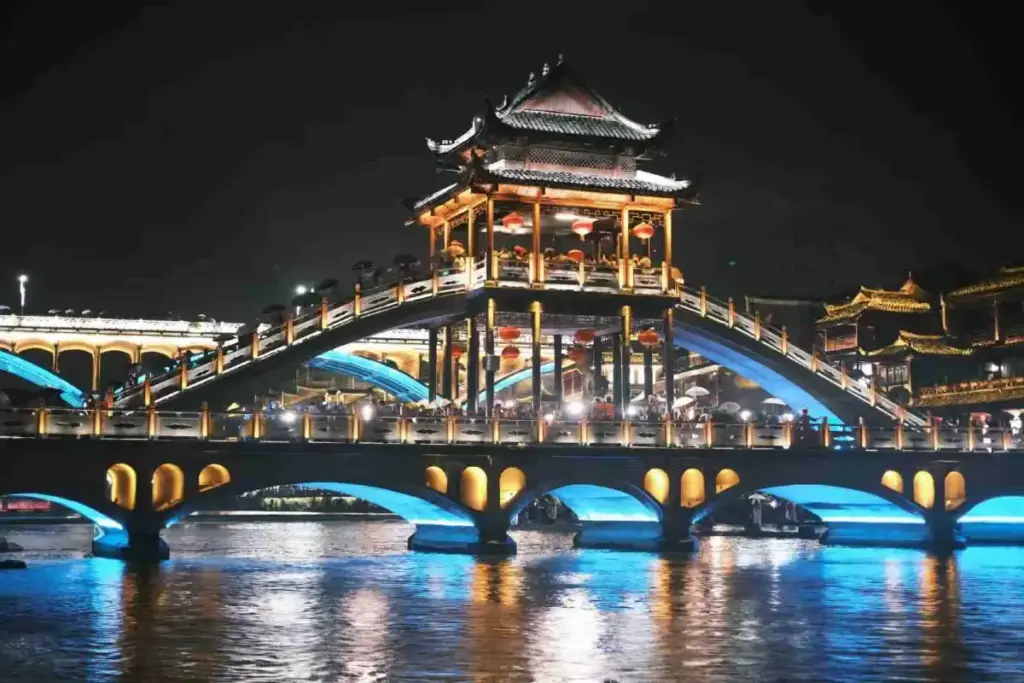
There is a place in the misty mountains of western China where time seems to have paused centuries ago. Where wooden stilted houses cling impossibly to the banks of an emerald river. Where the scent of smoked chili and wild ginger drifts through labyrinthine cobblestone alleys. Where silver headdresses catch the morning light, and the echo of ancient folk songs bounces off curved temple roofs.
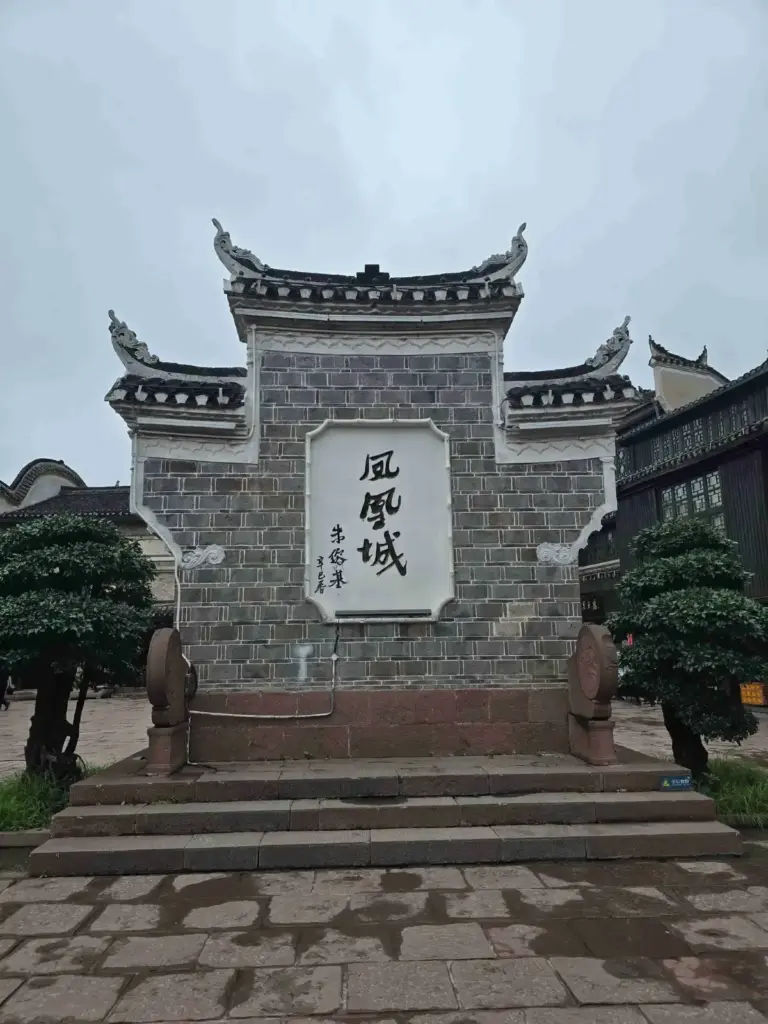
That place is Fenghuang Ancient Town (凤凰古城) — a 300-year-old settlement nestled in the Xiangxi Tujia and Miao Autonomous Prefecture of Hunan Province.
If you’ve never heard of Fenghuang, you’re not alone. While it remains relatively unknown to many Western travelers, within China it holds an almost mythic status. It has been called “China’s most beautiful small town” by international writers, celebrated by poets, painted by artists, and immortalized in one of the country’s most beloved novels.
This ultimate beginner’s guide is everything you need to know before stepping foot in Phoenix City. From its rich, turbulent history to the unique ethnic cultures that make Xiangxi unlike anywhere else in China, from the must-see attractions to the dishes you absolutely must try — this is your complete roadmap to experiencing one of China’s most enchanting destinations.
📜 A Brief History of Fenghuang Ancient Town: From Military Outpost to Cultural Treasure
To truly appreciate Fenghuang, you must first understand where it came from. This is not a town built for tourists. It was forged by war, shaped by trade, and preserved by isolation.
⚔️ The Military Origins (1704 – 1913)
Fenghuang Ancient Town was officially established in 1704 during the Qing Dynasty, though human settlement in the region dates back much further. Its strategic location — perched at the crossroads of Hunan, Guizhou, and the mountainous interior — made it a critical military garrison.
The name “Fenghuang” (凤凰), which translates to “Phoenix,” comes from a local legend. It is said that a pair of mythical phoenix birds once flew over the town, saw its extraordinary beauty, and decided to remain, forever protecting the people below. The two mountains flanking the town are said to resemble the wings of a phoenix in flight.
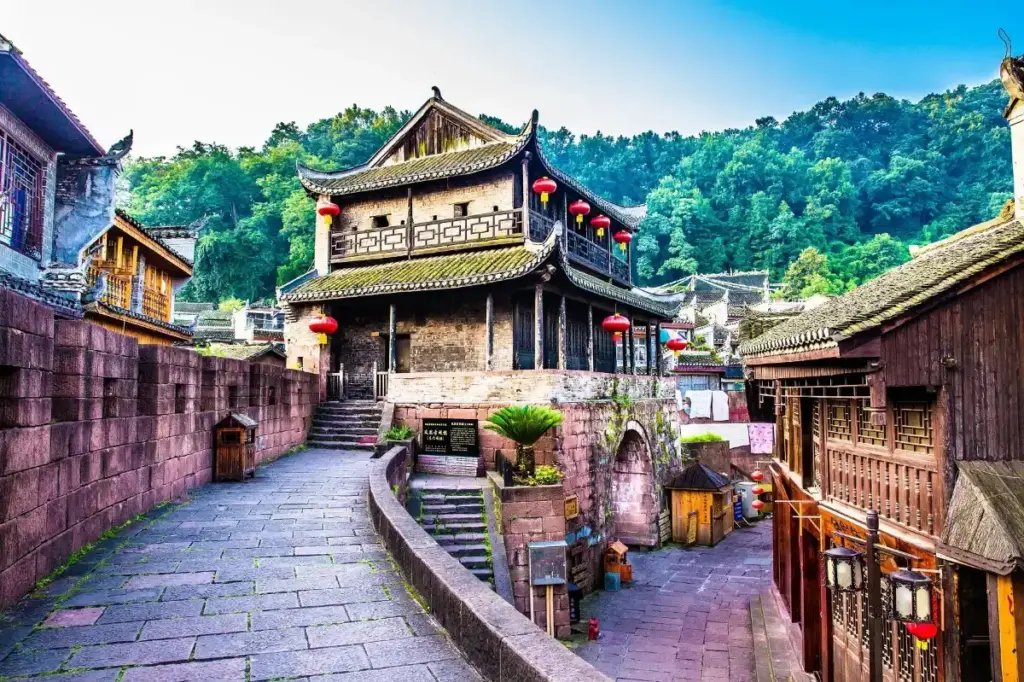
During the Qing Dynasty, the town served as the military headquarters for the western Hunan frontier. Its primary purpose was to control and monitor the indigenous Miao and Tujia populations who had lived in these mountains for thousands of years. The town was fortified with thick stone walls, watchtowers, and gates — remnants of which still stand today.
🏮 The Golden Age of Trade and Culture (1913 – 1949)
As military tensions eased in the early 20th century, Fenghuang transformed into a thriving commercial and cultural hub. The Tuojiang River became a vital trade route, carrying timber, tung oil, medicinal herbs, and handcrafted goods between the mountain interior and the larger cities of the Yangtze River basin.
Merchants, scholars, and artisans flocked to the town. Grand wooden mansions were built along the riverbanks. Tea houses, opera stages, and private gardens flourished. This era produced some of Fenghuang’s most famous sons, including Shen Congwen, the writer who would later put the town on the literary map, and Xiong Xiling, the first elected Prime Minister of the Republic of China.
🌫️ Isolation and Preservation (1949 – 1980s)
After 1949, the political and economic center of gravity in China shifted dramatically. The mountainous terrain that had once protected Fenghuang now isolated it. Modern roads and railways bypassed the town. Industrial development focused on the plains.
While this isolation meant economic hardship, it also became Fenghuang’s greatest blessing. While other ancient towns across China were demolished to make way for factories and highways, Fenghuang was left largely untouched. Its wooden stilted houses, stone bridges, and traditional architecture survived intact.
🌟 The Tourism Renaissance (1990s – Present)
In the late 20th century, word began to spread. Writers, photographers, and backpackers discovered Fenghuang and shared their stories. The Chinese government recognized the town’s extraordinary heritage and designated it a National 5A-Level Tourist Attraction — the highest rating possible in China’s tourism system.
Today, Fenghuang welcomes millions of visitors each year. The ancient walls still stand. The stilted houses still lean over the Tuojiang River. And the town continues to balance its role as a living, breathing community with its growing identity as one of China’s premier cultural destinations.
🏆 Why Fenghuang is Called “China’s Most Beautiful Small Town”
The title “China’s most beautiful small town” is not a marketing slogan invented by a tourism board. It originated from Rewi Alley, a renowned New Zealand writer, poet, and social reformer who spent over 60 years in China. During his extensive travels throughout the country in the mid-20th century, Alley visited hundreds of towns and villages. When he arrived in Fenghuang, he reportedly declared it “the most beautiful small town in China.”
But what exactly makes Fenghuang earn this distinction? Here are the key elements that set it apart:
🏘️ 1. The Architecture of the Stilted Houses (Diaojiaolou)
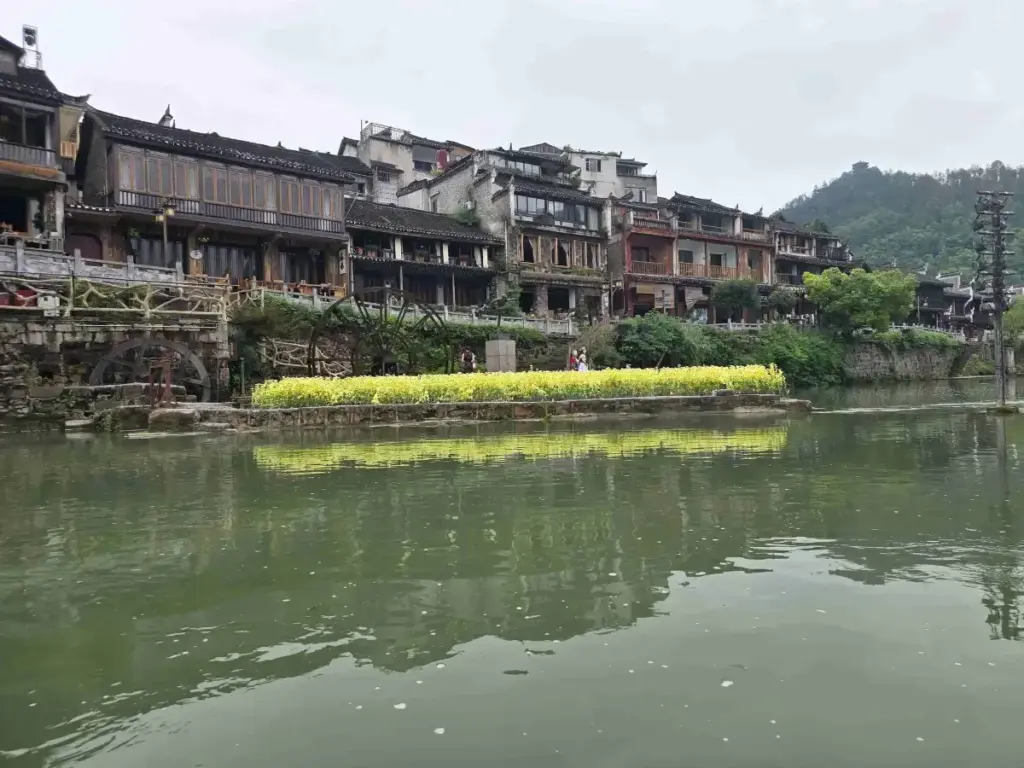
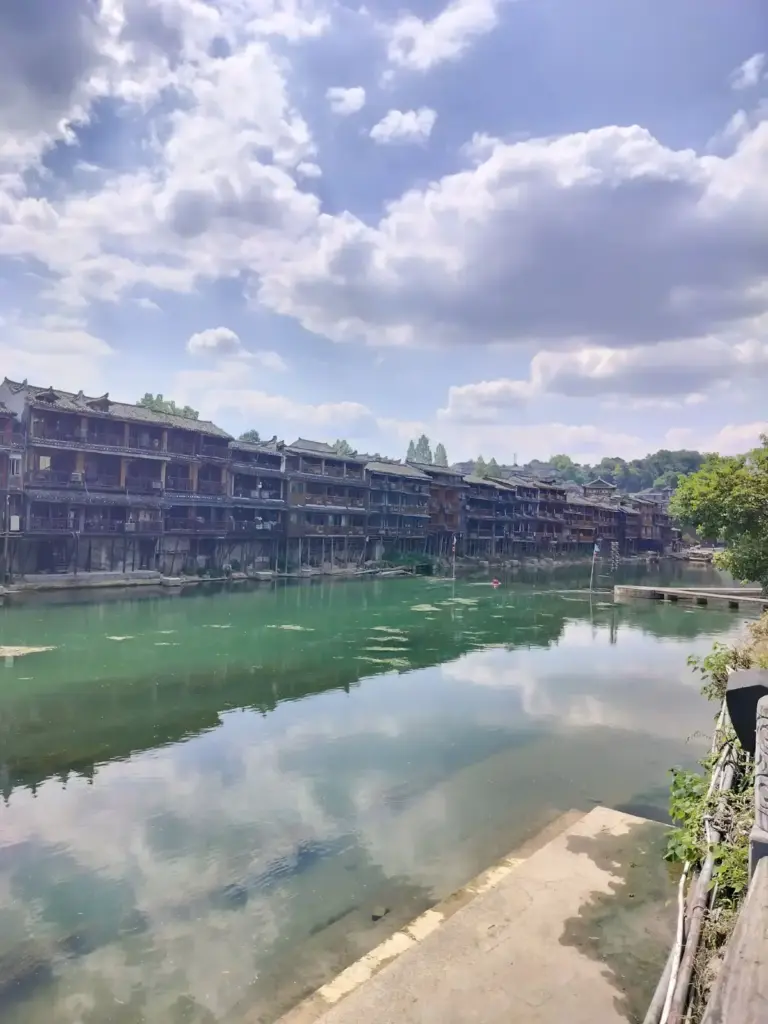
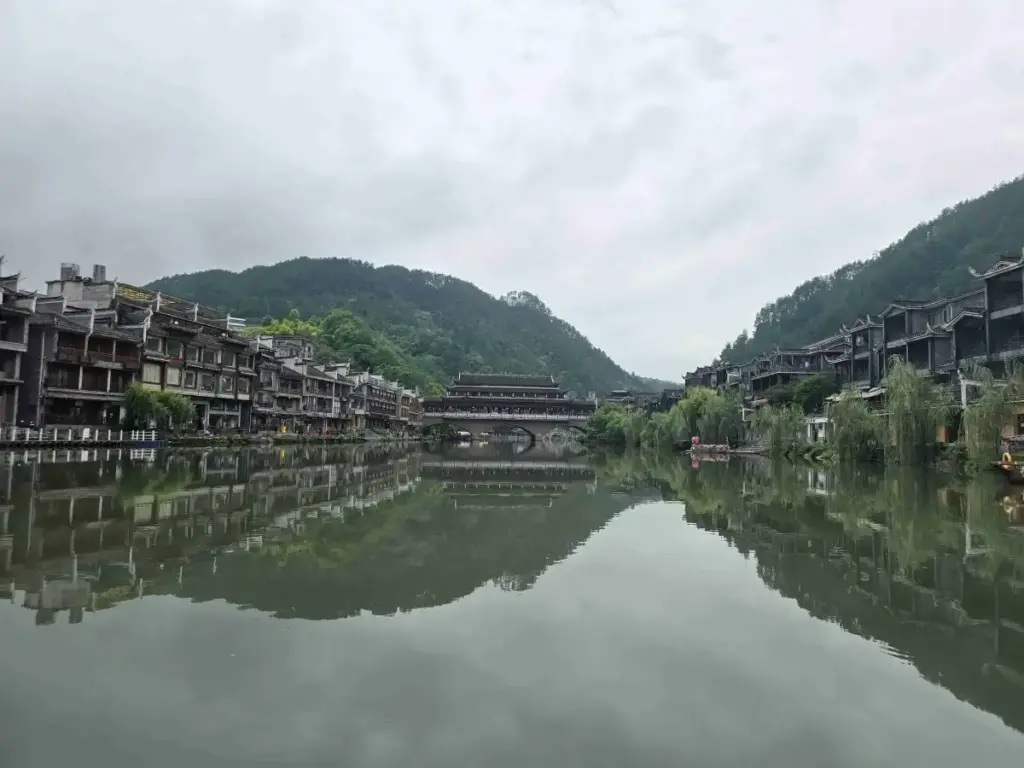
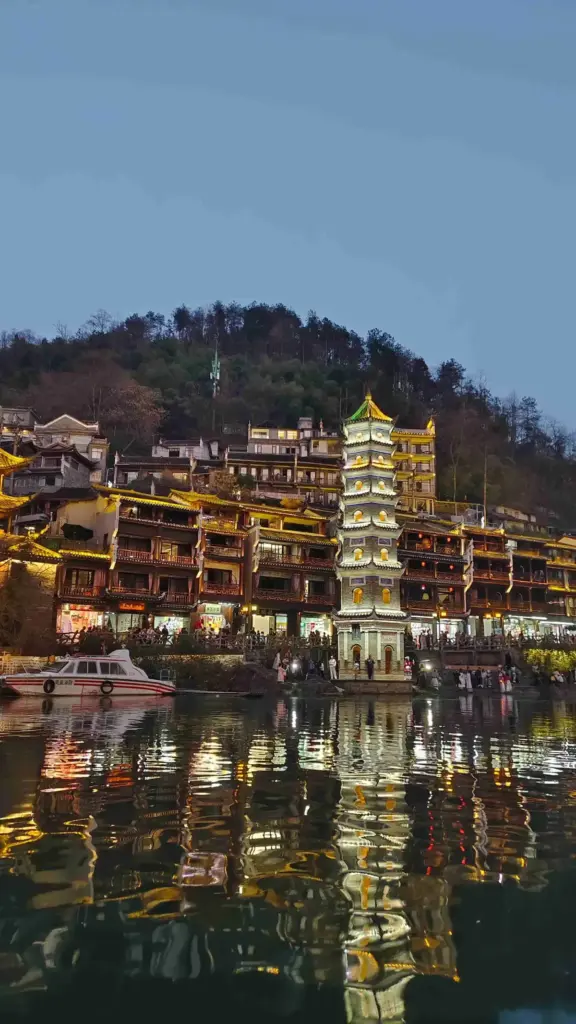
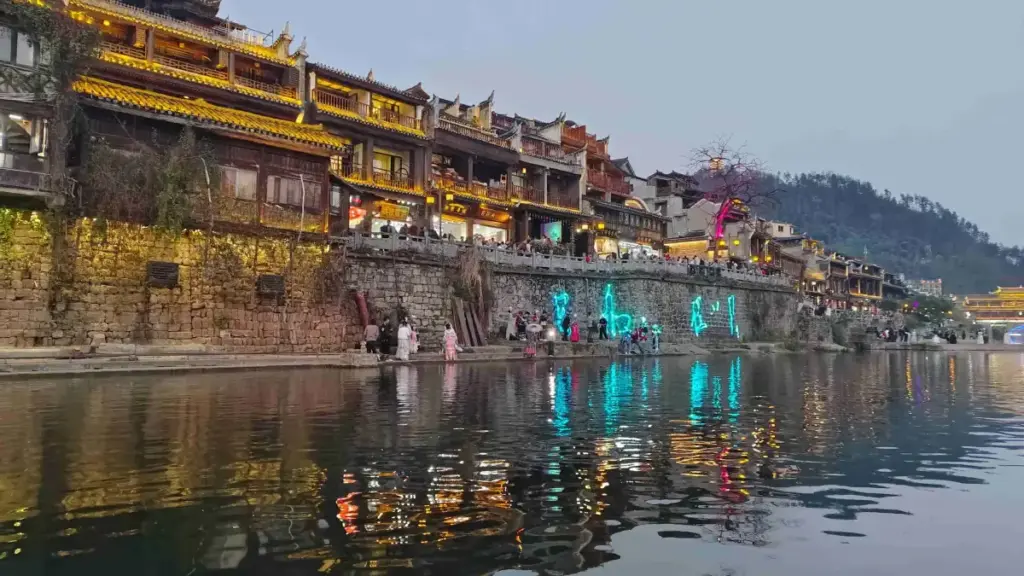
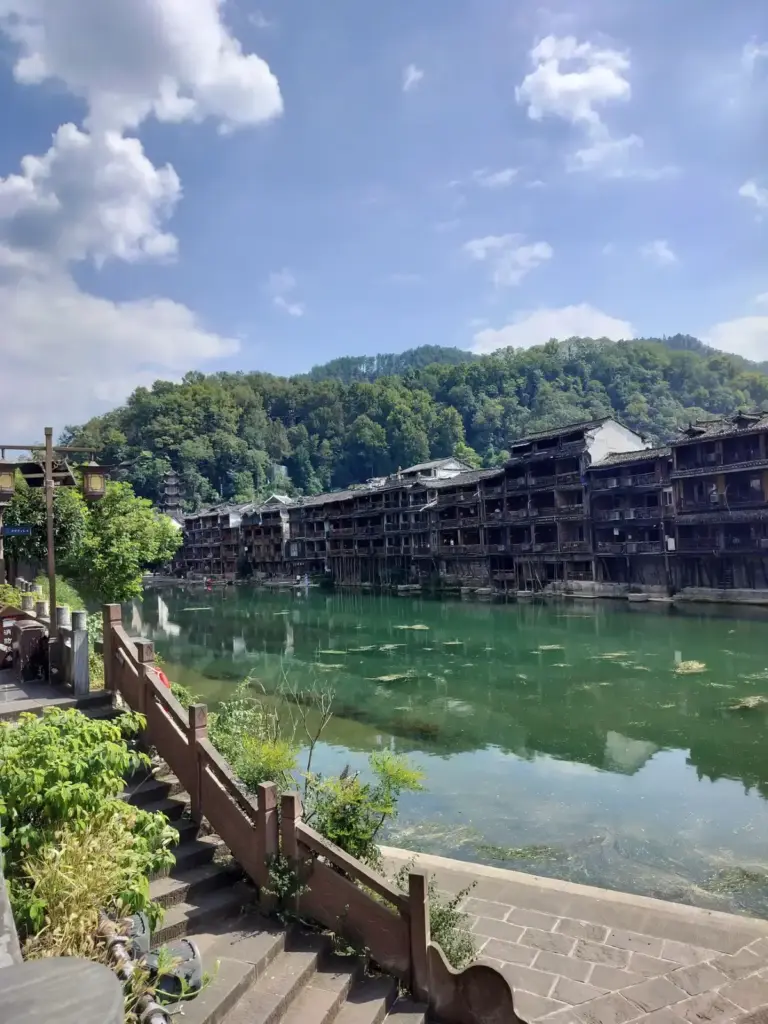
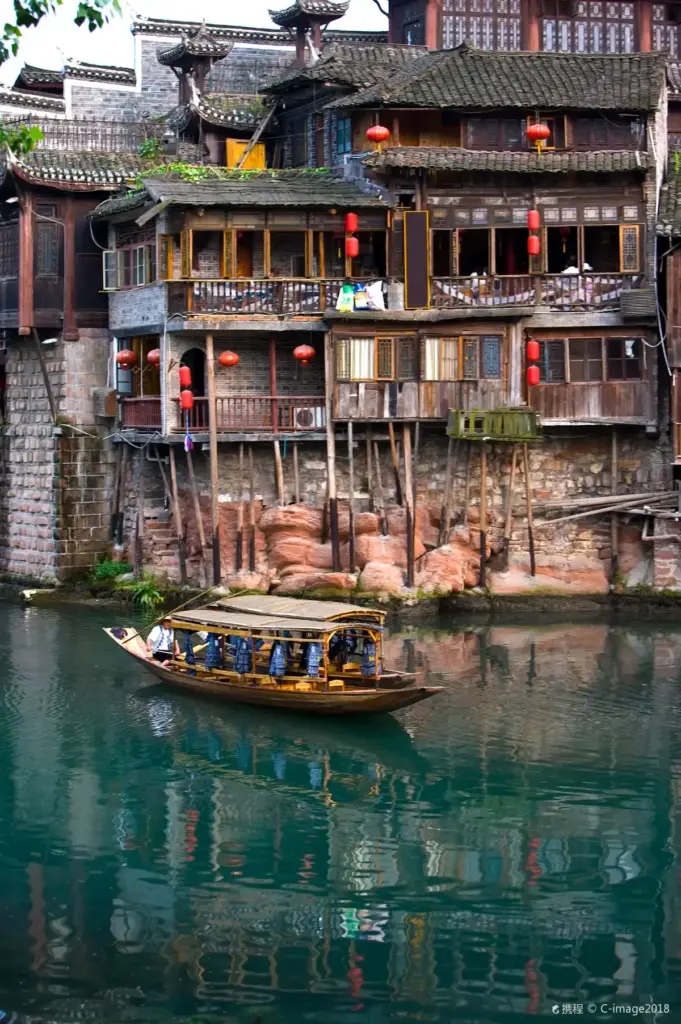
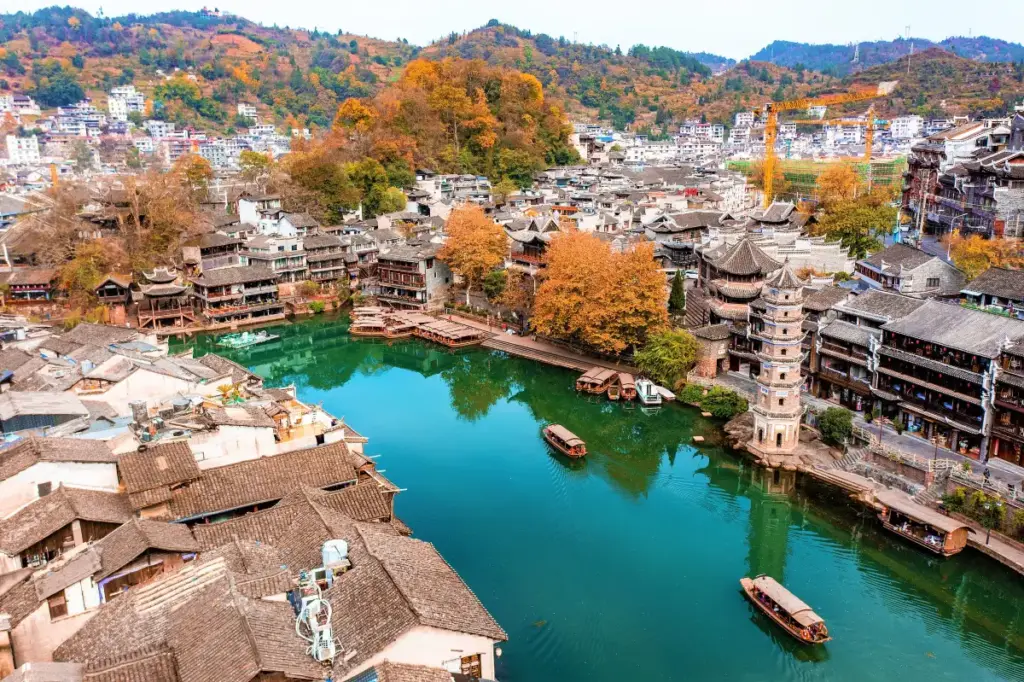
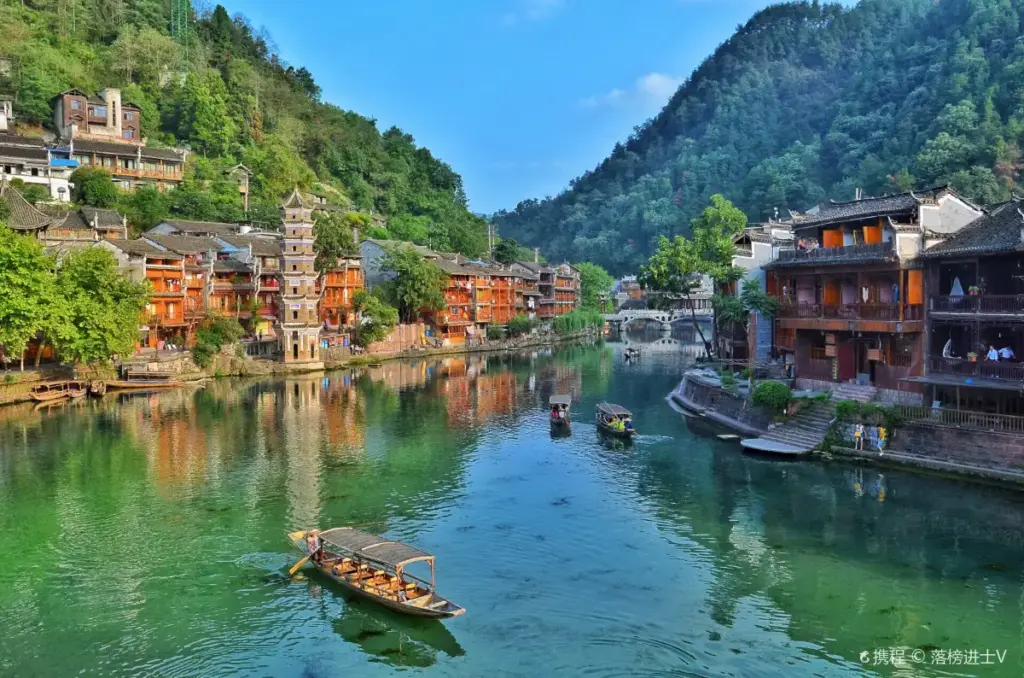
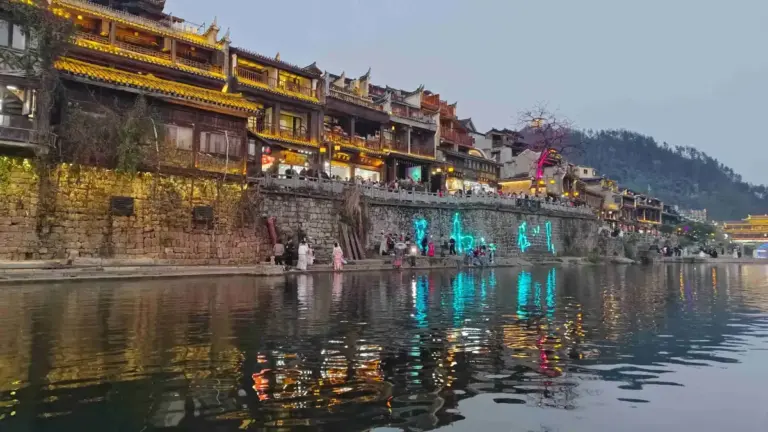
The most visually striking feature of Fenghuang is the Diaojiaolou (吊脚楼) — traditional wooden stilted houses built on wooden pillars driven directly into the riverbed. These structures were designed by the Miao and Tujia people to adapt to the steep, narrow banks of the Tuojiang River. The houses appear to float above the water, creating a breathtaking silhouette against the mountains.
🌊 2. The Tuojiang River Setting
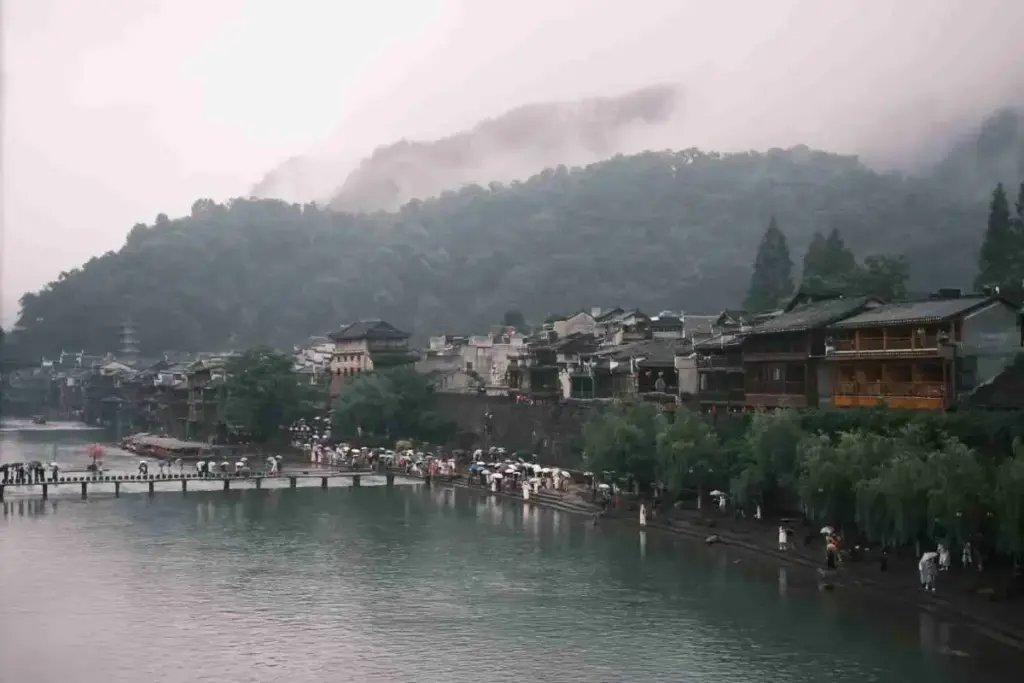
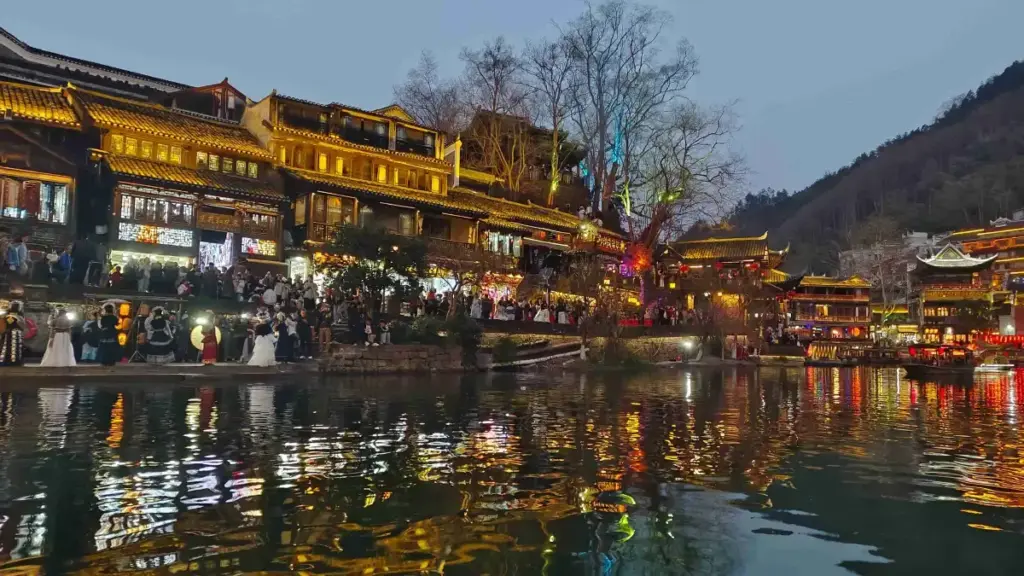
The Tuojiang River (沱江) is the lifeblood of Fenghuang. It flows gently through the center of the town, reflecting the wooden buildings, stone bridges, and red lanterns that line its banks. The river is not just a scenic backdrop; it is a living, functioning part of the town. Locals still wash vegetables in its waters, children skip stones across its surface, and fishermen punt wooden boats along its current.
🌫️ 3. The Atmospheric Magic
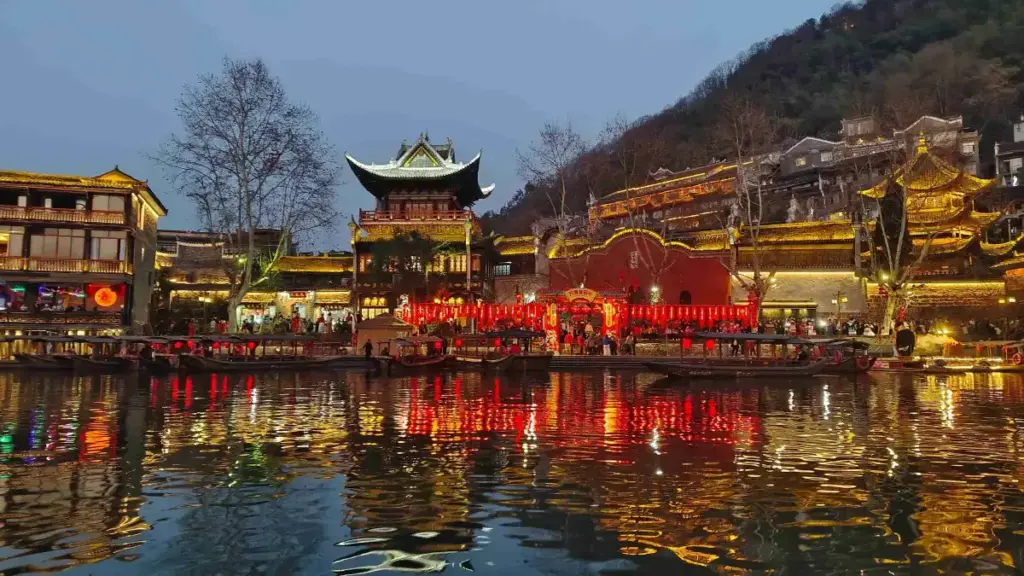
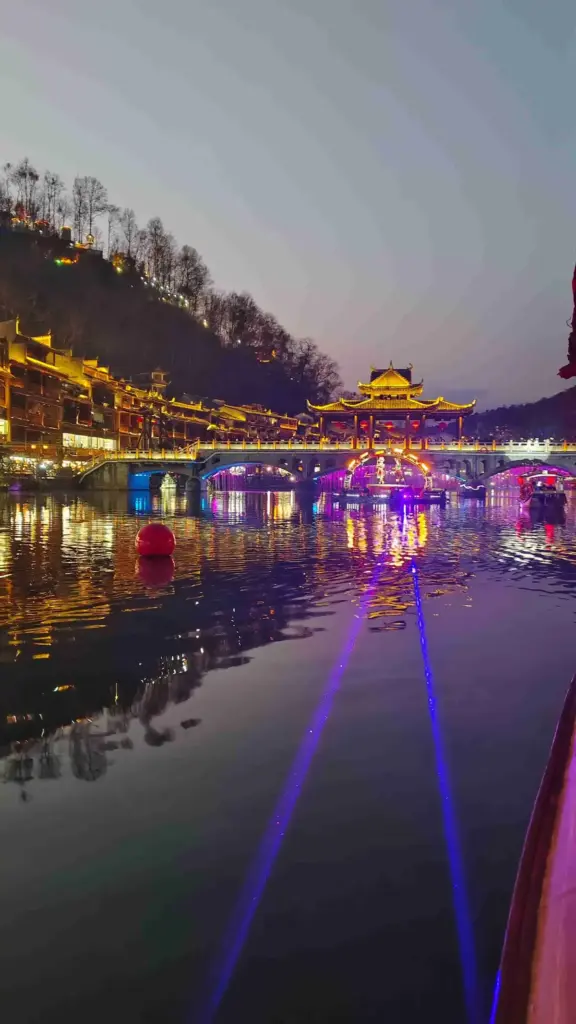
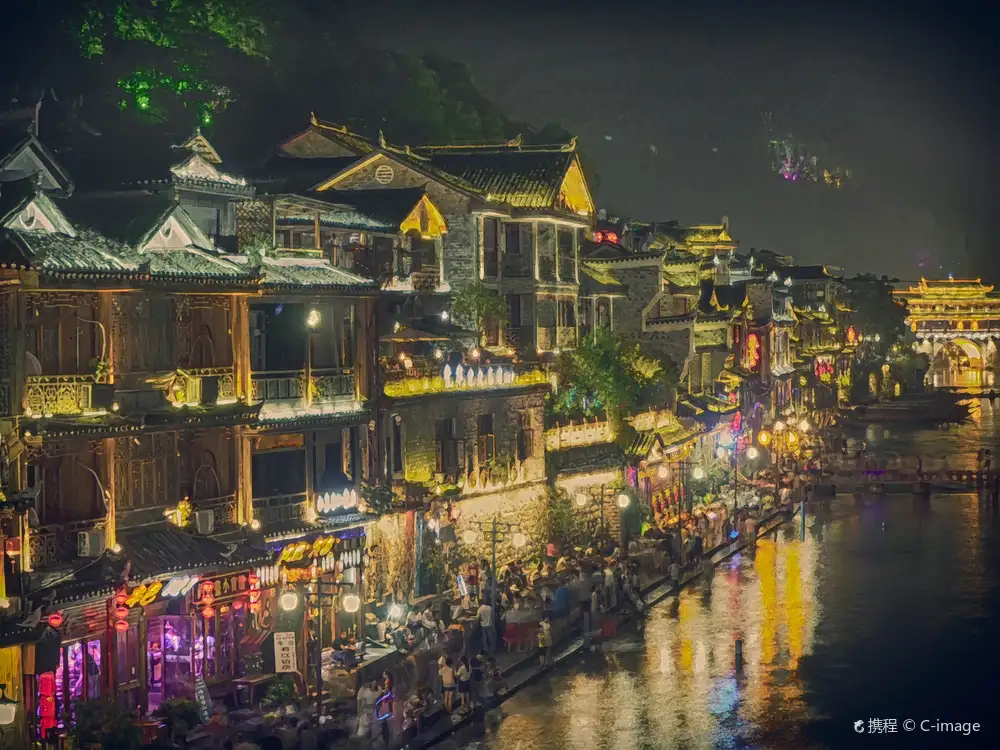
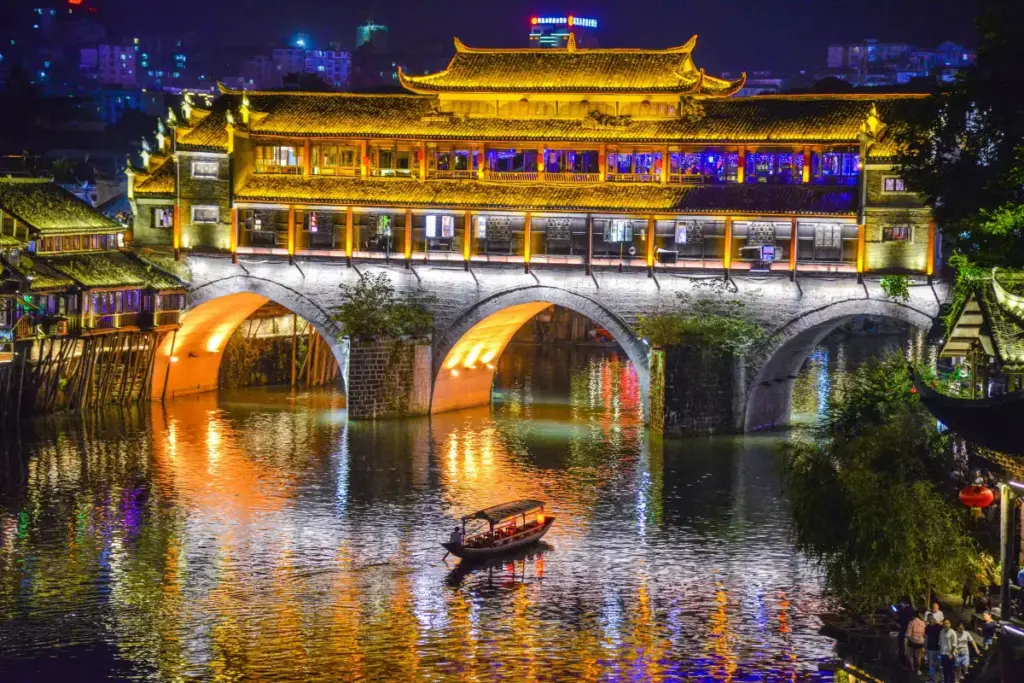
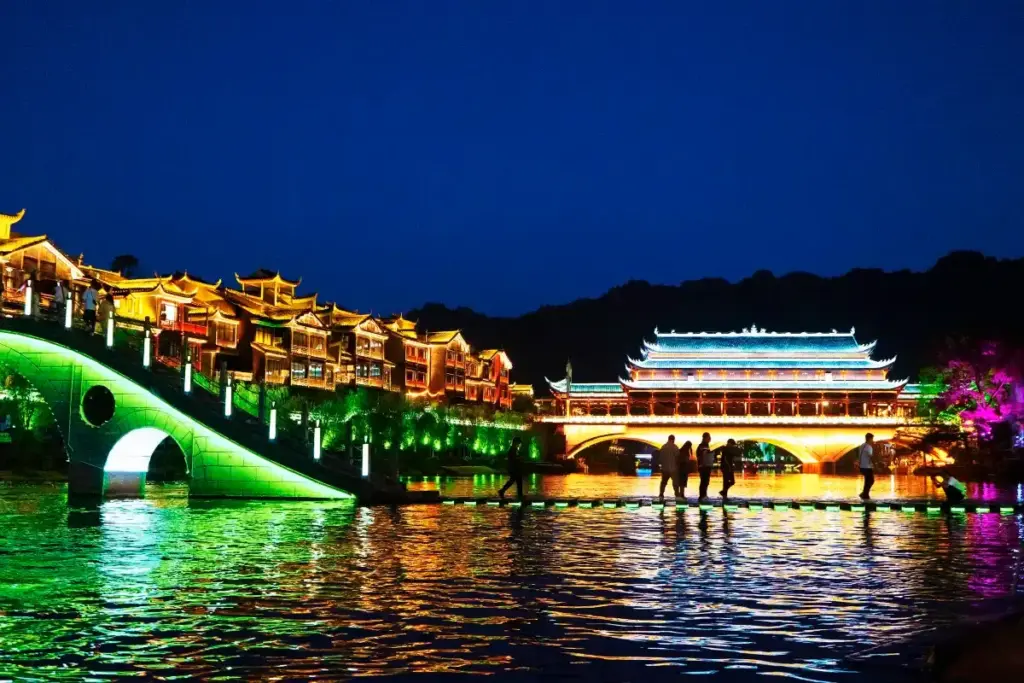
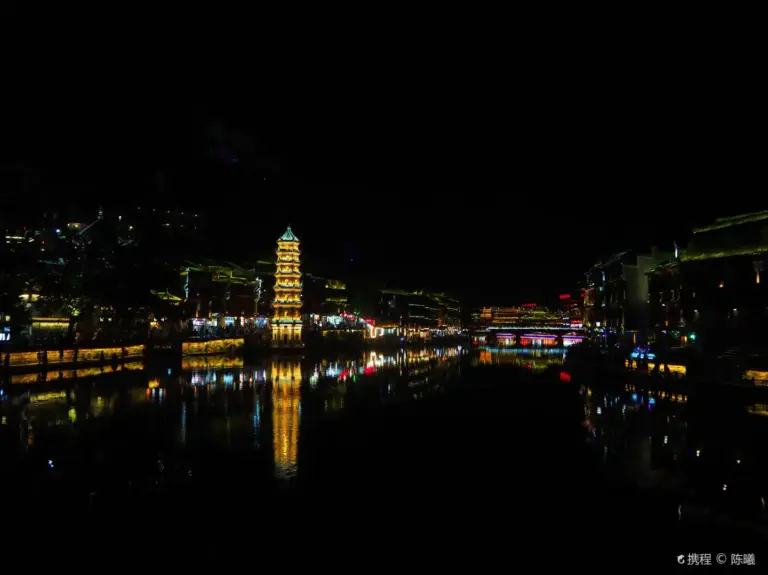
Fenghuang possesses an intangible quality that is difficult to describe but impossible to forget. In the early morning, a thin, silvery mist rises from the river, wrapping the stilted houses in an ethereal veil. At night, thousands of amber lanterns illuminate the wooden facades, and their reflections shimmer on the dark water like liquid gold. The town exists in a state of perpetual poetry.
📚 4. The Literary Legacy
Fenghuang is the spiritual home of Shen Congwen (1902–1988), one of China’s most celebrated 20th-century writers. His masterpiece, Border Town (边城), is a lyrical, heartbreaking love story set in a fictionalized version of Fenghuang. The novel captures the innocence, beauty, and tragedy of rural Xiangxi life. Reading Border Town before visiting Fenghuang adds an emotional depth to the experience that few destinations can match.
🎭 5. The Living Cultural Heritage
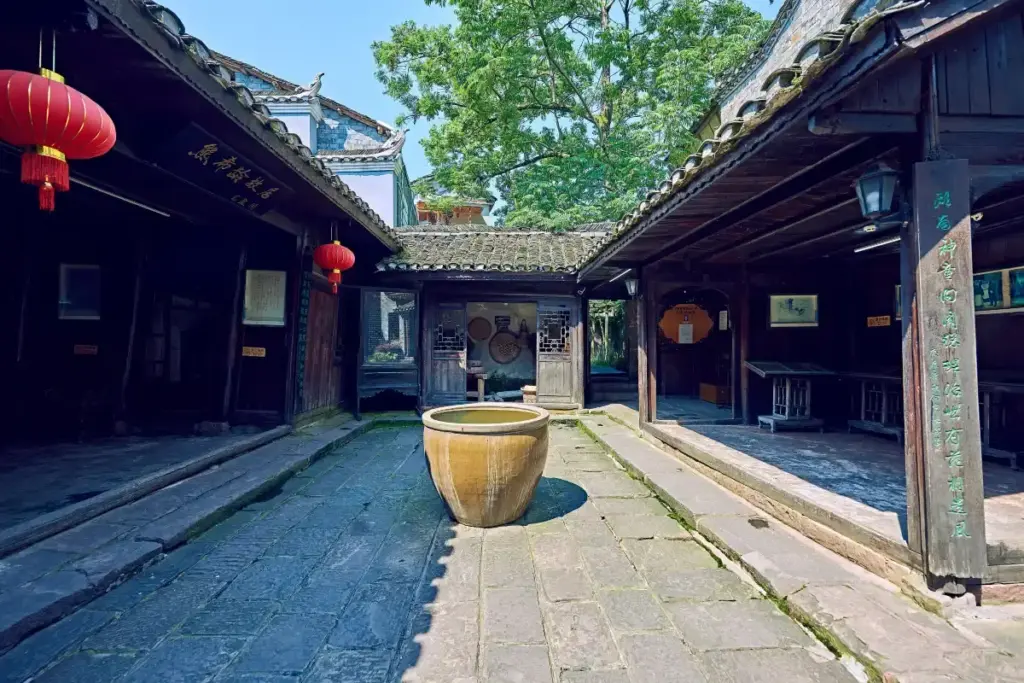
Unlike many “ancient towns” in China that have been converted into open-air museums or commercial theme parks, Fenghuang is still a living, breathing community. Local residents still live in the old houses. Traditional crafts like Miao silver-smithing, Tujia embroidery, and batik dyeing are still practiced in small workshops. The town feels authentic, not manufactured.
🌄 What Makes the Xiangxi Region So Unique?
Fenghuang does not exist in a vacuum. It is the crown jewel of a broader region — Xiangxi (湘西) — which is one of the most culturally distinct, geographically dramatic, and historically complex areas in all of China.
🗻 The Geography: A Land of Mountains, Rivers, and Mist
Xiangxi literally translates to “Western Hunan.” It is a region defined by rugged karst mountains, deep river gorges, dense subtropical forests, and a climate that produces frequent fog and mist. The terrain is so rugged that for centuries, Xiangxi was virtually inaccessible to outsiders. This isolation allowed the indigenous cultures to develop in remarkable isolation, preserving traditions, languages, and customs that have vanished from the rest of China.
👥 The People: Miao, Tujia, and Han Coexistence
Xiangxi is officially the Xiangxi Tujia and Miao Autonomous Prefecture, home to two major ethnic minority groups alongside the Han Chinese majority:
🪙 The Miao (Hmong) People: The Miao are one of China’s largest and most culturally rich ethnic minorities. In Xiangxi, they are known for:
- Silver Jewelry: Miao women wear elaborate, hand-crafted silver headdresses, necklaces, and bracelets during festivals. A single ceremonial outfit can contain several kilograms of pure silver, representing generations of family wealth and craftsmanship.
- Embroidery and Batik: Intricate, colorful textile work passed down from mother to daughter.
- Folk Songs and Dances: The Miao have a rich oral tradition. Their “Flying Songs” (Fei Ge) are haunting, melodic chants performed during festivals and courtship rituals.
🏺 The Tujia People: The Tujia are the other dominant ethnic group in Xiangxi. They are known for:
- Stilted House Architecture: The Diaojiaolou style originated with the Tujia.
- Hand-Waving Dance (Baishou Wu): A traditional communal dance performed during festivals, involving hundreds of participants moving in synchronized patterns.
- Smoked and Preserved Foods: The Tujia developed unique techniques for smoking and curing meats, resulting in the distinctive flavors of Xiangxi cuisine.
🌿 The Spiritual Landscape
Xiangxi is steeped in animism, shamanism, and folk religion. For centuries, the Miao and Tujia people practiced a spiritual tradition centered on nature worship, ancestor veneration, and the belief in spirits inhabiting mountains, rivers, and trees. While modern religion has influenced the region, echoes of these ancient beliefs persist in local festivals, rituals, and the deep reverence the community still holds for the natural landscape.
🗣️ The Languages
In the markets and alleys of Fenghuang, you will hear a symphony of languages. While Mandarin Chinese is spoken by everyone, you will also hear Xiangxi Miao dialects and Tujia language, both of which are tonal, unwritten (historically), and completely unrelated to Mandarin. This linguistic diversity is a living testament to the region’s cultural richness.
🗺️ Top Attractions You Simply Cannot Miss in Fenghuang
Now that you understand the history and cultural context, let’s talk about what you should actually do and see when you arrive.
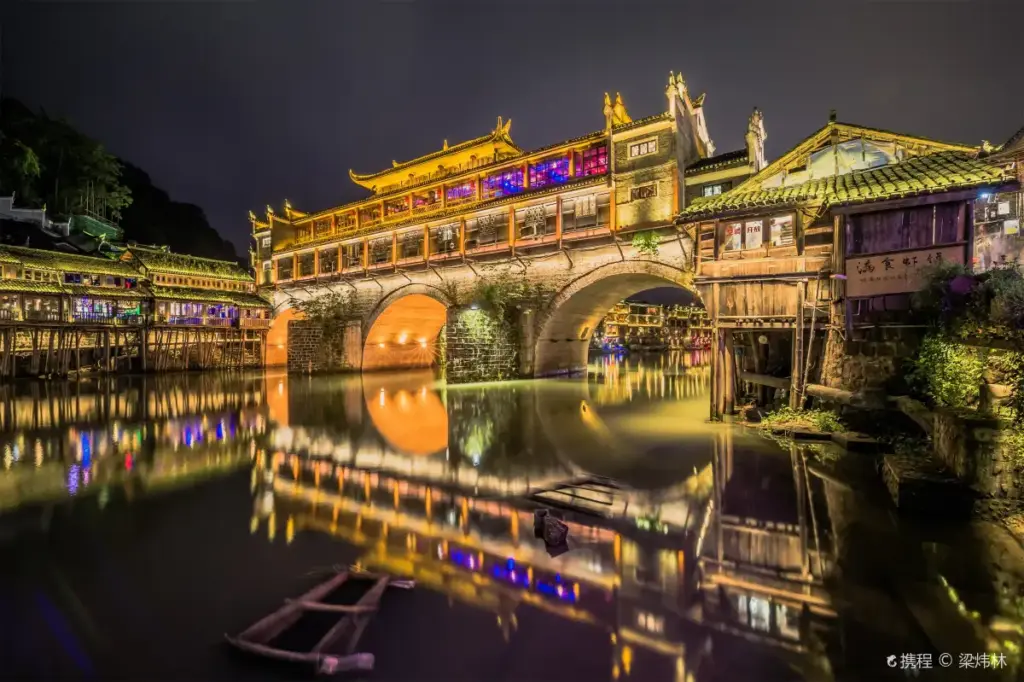
🌉 1. The Rainbow Bridge (Hongqiao – 虹桥)
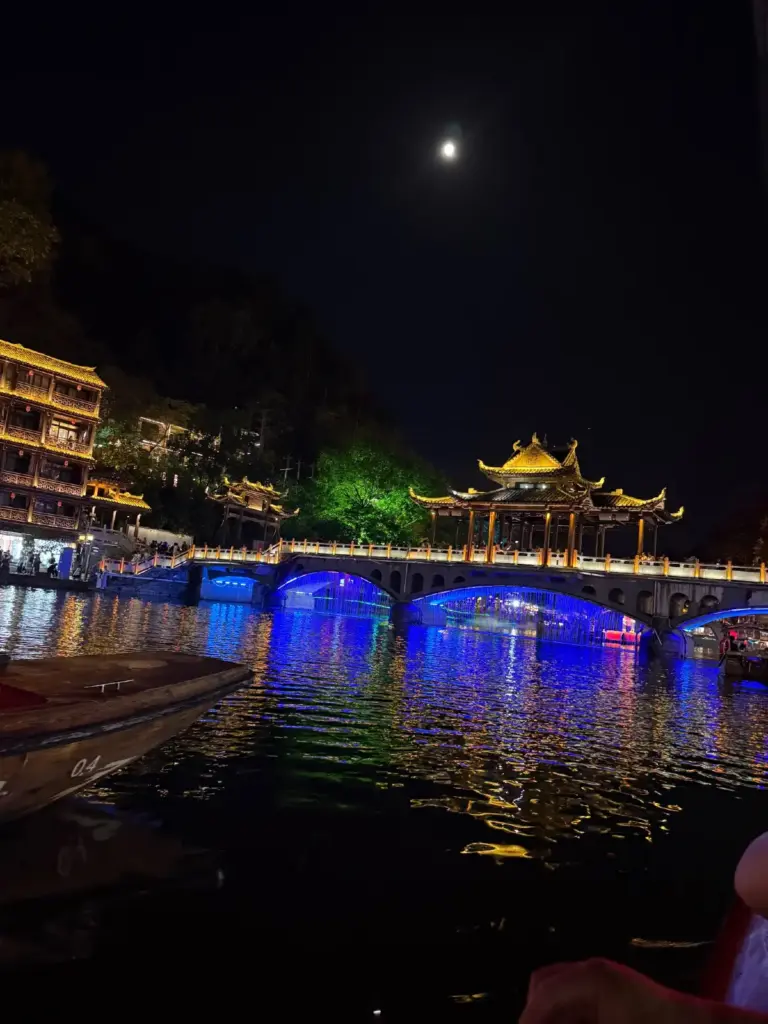
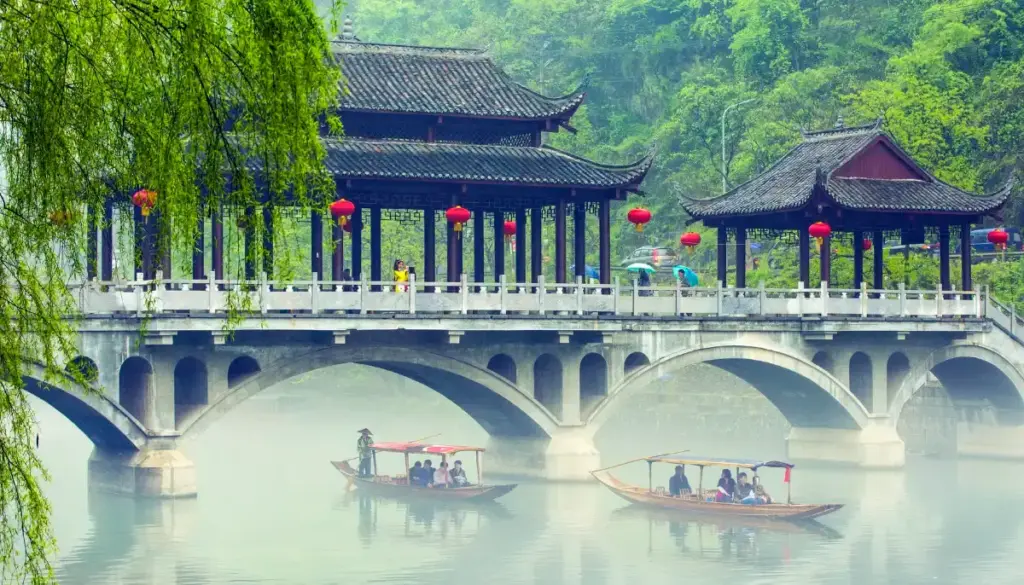
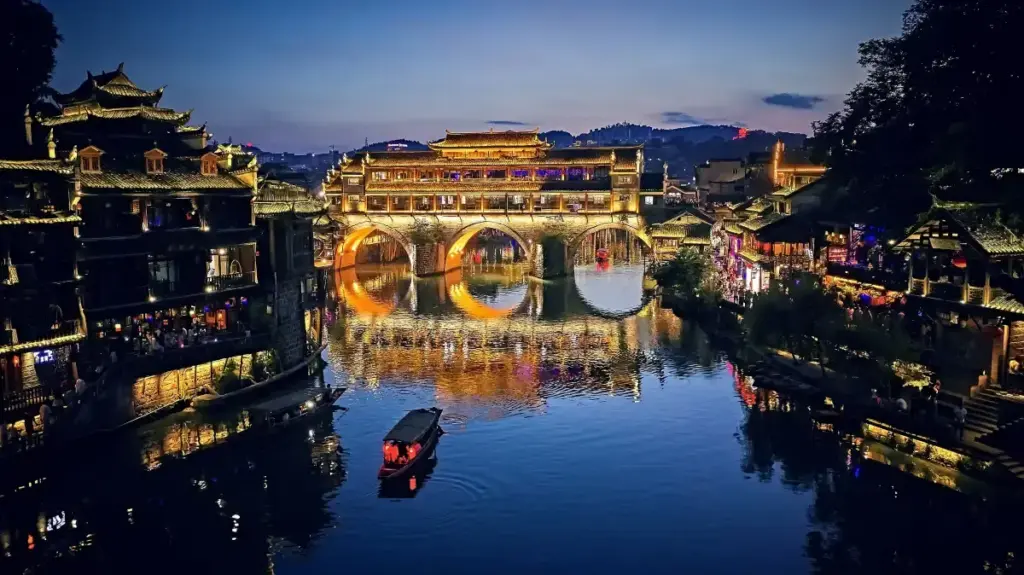
This is the architectural icon of Fenghuang. Built during the Ming Dynasty and rebuilt several times since, the Rainbow Bridge is a two-story wooden structure spanning the Tuojiang River. The lower level is a pedestrian walkway lined with small shops selling local crafts. The upper level is a traditional tea house and gallery offering panoramic views of the river and stilted houses. Walking across Hongqiao at sunset, with the mist rolling in and the lanterns beginning to glow, is the quintessential Fenghuang experience.
🪨 2. The Jumping Stones (Tiaoyan – 跳岩)
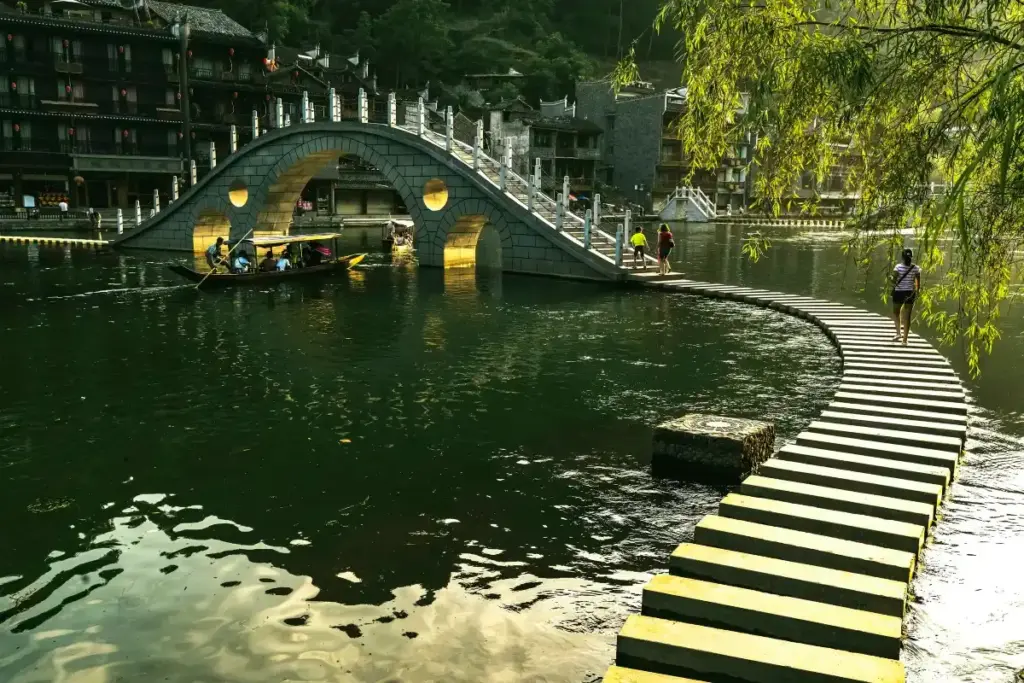
One of the most photographed spots in the ancient town, the Jumping Stones are a series of large, flat stone pillars placed across the Tuojiang River. For centuries before modern bridges were built, locals used these stones to cross the water. Today, they serve as a fun, slightly adventurous photo opportunity. Tip: Wear shoes with good grip, especially after rain, as the stones can be slippery!
🏛️ 3. Shen Congwen’s Former Residence (沈从文故居)
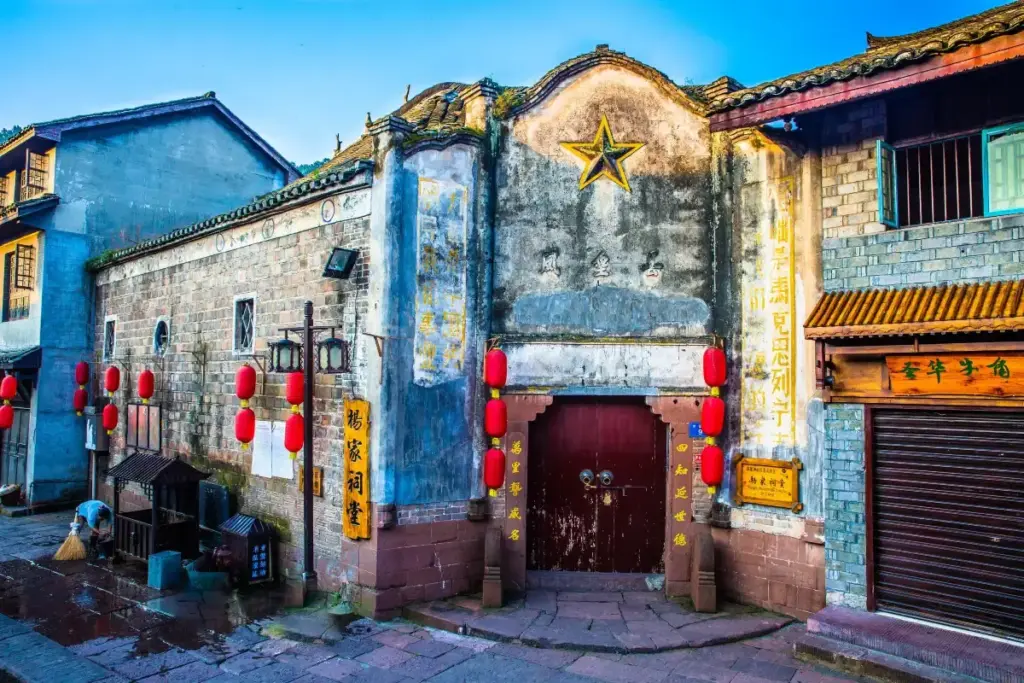
A small, modest courtyard house in the heart of the ancient town, this is where the great writer Shen Congwen was born and spent his childhood. The residence has been preserved with period furniture, personal artifacts, and photographs. For fans of Border Town, this is a pilgrimage site. Standing in the quiet courtyard where Shen Congwen grew up, you can almost hear the echoes of the stories that would make him famous.
🏠 4. Xiong Xiling’s Former Residence (熊希龄故居)
The childhood home of Xiong Xiling, the first elected Prime Minister of the Republic of China (1913-1914). The residence showcases the life of a prominent Xiangxi family during the late Qing Dynasty and offers insight into the political history of early 20th-century China.
🛶 5. Tuojiang River Boat Ride (沱江泛舟)
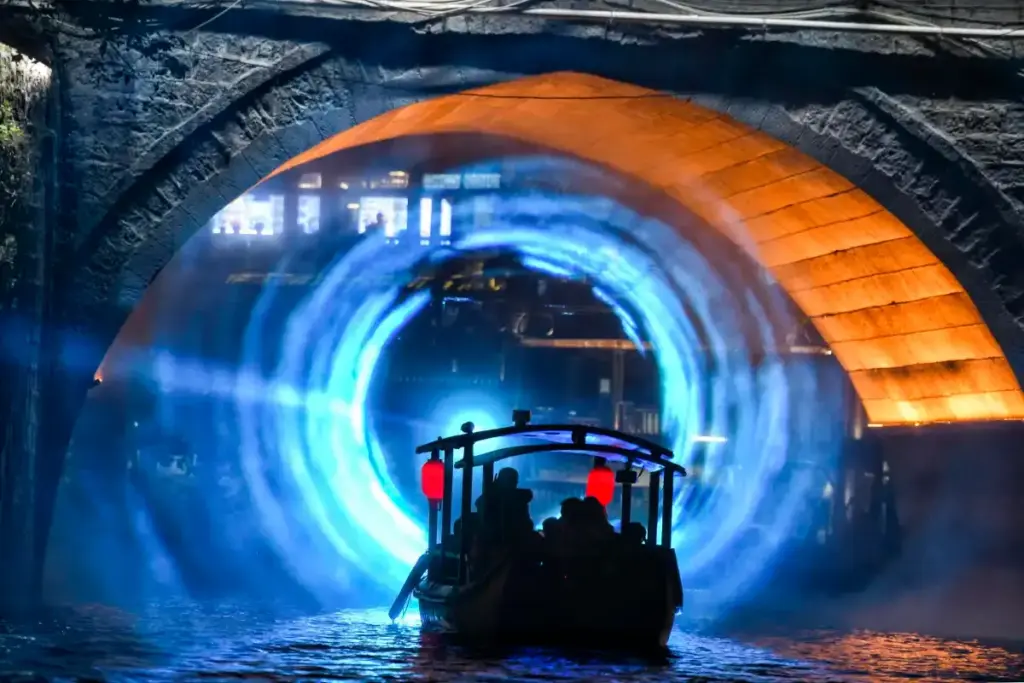
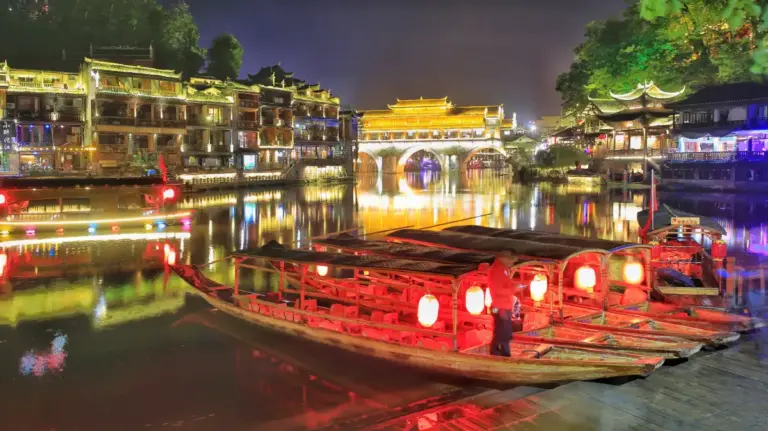
No visit to Fenghuang is complete without seeing the stilted houses from the water. A traditional wooden boat or bamboo raft will carry you gently down the Tuojiang River, passing under the Rainbow Bridge and offering unobstructed views of the Diaojiaolou. The boatman will often punt the vessel using a long bamboo pole, just as they have done for centuries.
🏰 5. The Ancient City Walls and Gates
Remnants of the Qing Dynasty military fortifications still surround parts of the old town. The North Gate (Bei Men) and the stone walls along the river are well-preserved and offer a fascinating glimpse into Fenghuang’s military past. Walking along the top of the old walls provides a unique elevated perspective of the rooftops and alleys below.
🌳 6. Nanhuashan National Forest Park (南华山国家森林公园)
If you want to escape the crowds and get some fresh mountain air, hike up to Nanhuashan, the forested hill overlooking Fenghuang. The trails wind through pine forests and offer stunning panoramic views of the entire ancient town, the river, and the surrounding karst peaks.
🕳️ 7. Qiliang Cave (奇梁洞)
Located just outside the town center, Qiliang Cave is a massive karst limestone cavern stretching over 6 kilometers. Inside, you’ll find towering stalactites, underground rivers, and illuminated chambers that look like something out of a fantasy novel. It’s a great half-day excursion, especially during hot summer afternoons.
🎭 Experiencing Miao and Tujia Culture: Beyond the Sightseeing
Fenghuang is not just a place to see; it is a place to experience. Here are the most meaningful cultural activities you can participate in:
👘 Rent a Traditional Ethnic Costume
One of the most popular activities in Fenghuang today is renting a traditional Miao or Tujia costume. Shops throughout the ancient town offer elaborate outfits complete with silver headdresses, embroidered jackets, and flowing skirts. You can dress up and have a professional photographer take portraits on the Rainbow Bridge, along the riverbank, or in the cobblestone alleys. It’s a fun, immersive way to connect with the visual culture of the region.
🪙 Watch a Miao Silver Jewelry Demonstration
The Miao people are master silversmiths. In small workshops tucked into the alleys, you can watch artisans hand-forge intricate silver jewelry using techniques passed down through dozens of generations. The process involves melting, hammering, engraving, and polishing raw silver into breathtaking necklaces, bracelets, and hairpins. Many workshops allow you to purchase pieces directly from the maker.
🎶 Attend a Folk Music or Dance Performance
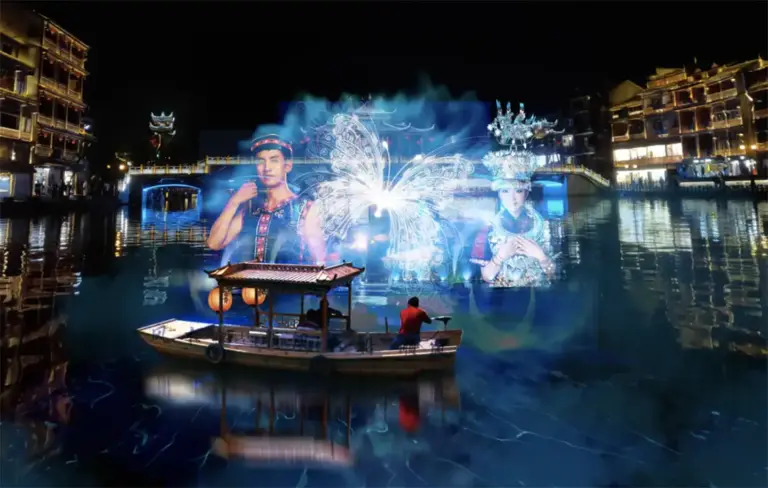
During peak tourist seasons and local festivals, you may encounter live performances of Miao Flying Songs, Tujia Hand-Waving Dances, and traditional drum ensembles. These performances are often held in the town squares or along the riverfront. The music is haunting, rhythmic, and deeply connected to the spiritual traditions of the highlands.
🧵 Learn About Batik and Embroidery
The Miao and Tujia women of Xiangxi are renowned for their textile arts. You can visit small studios where artisans demonstrate the ancient techniques of wax-resist dyeing (batik) and hand-stitched embroidery. The patterns are not merely decorative; they tell stories of migration, nature, and ancestral spirits.
🍜 The Food Guide: What to Eat in Fenghuang
Xiangxi cuisine is a branch of Hunan cuisine (Xiang Cai), one of China’s Eight Great Culinary Traditions. It is characterized by bold flavors, generous use of chili peppers, smoked and preserved ingredients, and sour, tangy broths. But Xiangxi adds its own unique mountain twist, incorporating wild herbs, river fish, and ethnic minority cooking techniques.
🔥 Must-Try Dishes:
🦆 Xiangxi Blood Duck (湘西血粑鸭 – Xue Ba Ya) The single most famous dish in Fenghuang. Duck is stir-fried with glutinous rice cakes that have been soaked in duck blood, creating a rich, savory, slightly spicy dish with an incredibly deep umami flavor. It sounds intimidating, but it is absolutely delicious.
🐟 Sour Soup Fish (酸汤鱼 – Suan Tang Yu) A tangy, refreshing hot pot-style soup made with fermented tomatoes, wild mountain herbs, and fresh river fish. The sourness is not vinegary but comes from natural fermentation, giving it a complex, layered flavor.
🥓 Smoked Pork with Dried Chili (腊肉炒干辣椒) The Tujia people have perfected the art of smoking and curing pork. Thinly sliced smoked pork is stir-fried with fiery dried chilies, garlic shoots, and wild onions. It’s smoky, salty, spicy, and utterly addictive.
🍡 Sticky Rice Cakes (糍粑 – Ci Ba) A beloved street food snack. Glutinous rice is pounded into a soft, chewy cake, then pan-fried until crispy on the outside and soft on the inside. It’s often dusted with sugar, sesame seeds, or a spicy chili dip.
🌶️ Stir-Fried Wild Vegetables Xiangxi’s mountains are rich with wild greens, ferns, and mushrooms. Simply stir-fried with garlic and a splash of soy sauce, these dishes showcase the freshness of the local terroir.
🍵 Drinks to Try:
- Xiangxi Maojian Tea: A local green tea with a delicate, slightly sweet flavor.
- Ginger Tea (姜茶): Perfect for cool mornings by the river.
- Local Rice Wine (米酒): A sweet, mildly alcoholic beverage made from fermented glutinous rice.
📍 Where to Eat:
- Riverside Restaurants: Offer the best views but charge a premium. Great for a special dinner.
- Inner Alley Eateries: Walk 2-3 streets back from the river for authentic, affordable, local-run spots.
- Night Market Stalls: Perfect for trying multiple street food snacks in one evening.
🗓️ Best Time to Visit Fenghuang Ancient Town
Fenghuang is beautiful year-round, but certain seasons offer distinctly different experiences.
🌸 Spring (March – May): The Season of Mist
Spring is arguably the most photogenic time to visit. The increased humidity and shifting temperatures create thick, beautiful fogs over the Tuojiang River almost every dawn. The surrounding mountains turn lush green, and wildflowers bloom along the hiking trails. Expect occasional drizzle — pack a rain jacket!
☀️ Summer (June – August): Lush and Lively
Summer brings hot, humid weather (temperatures can exceed 30°C / 86°F) but also the most vibrant greenery and the liveliest nightlife. The river is at its fullest, making for excellent boat rides. This is also the peak season for local ethnic minority festivals, including dragon boat racing and Miao silver-jewelry celebrations. Expect larger crowds due to school holidays.
🍂 Autumn (September – November): The Golden Season
Autumn offers the most comfortable weather — cool, crisp, and dry. Temperatures range from 15°C to 25°C (59°F – 77°F). The skies are clear, providing stunning blue backdrops for the dark wooden architecture. This is the best season for hiking, exploring the surrounding mountains, and walking the cobblestone alleys without breaking a sweat.
❄️ Winter (December – February): Solitude and Snow
Winter is cold and damp (2°C – 10°C / 35°F – 50°F), but it is also the quietest and most affordable time to visit. The tourist crowds thin out dramatically. If you are incredibly lucky, a winter snowfall will dust the curved, tiled rooftops in white — a rare and breathtaking sight.
⚠️ Dates to Avoid:
Chinese National Day Golden Week (October 1-7) and Chinese New Year (Late January/February) bring overwhelming crowds, tripled hotel prices, and long queues for every attraction. If possible, plan your trip outside these periods.
🏨 Where to Stay: Choosing Your Perfect Fenghuang Base
🏮 Riverside Stilted House Hotels (Diaojiaolou Guesthouses)
The most iconic (and romantic) option. You’ll sleep in a traditional wooden stilted house with a balcony overlooking the Tuojiang River. Wake up to the sound of the water and the sight of morning mist.
- Pros: Unbeatable atmosphere, stunning views, authentic experience.
- Cons: Can be noisy (thin wooden walls, proximity to riverside bars), basic plumbing in older buildings, higher prices.
- Tip: Request a room on the upper floors, away from the bar district, if you’re a light sleeper.
🏔️ Hillside Boutique Hotels
Perched on the slopes above the ancient town, these hotels offer panoramic views of the river, the stilted houses, and the mountains. They tend to be quieter, more modern, and better insulated.
- Pros: Better sleep quality, modern amenities, great photo opportunities from the terrace.
- Cons: Requires walking up/down hills, slightly further from the main action.
🏙️ Modern Hotels Outside the Ancient Town
For travelers who prioritize comfort and convenience, several modern chain hotels are located just outside the ancient town walls.
- Pros: Reliable amenities, air conditioning, elevators, easier luggage access.
- Cons: Less atmospheric, requires a short walk or taxi ride to the scenic area.
📸 Photography Tips: Capturing the Magic of Fenghuang
Fenghuang is a photographer’s dream. Here are the best spots and times to get the perfect shot:
🌅 Best Time for Morning Mist Photography:
6:00 AM – 7:30 AM. Head to the riverfront near the Rainbow Bridge or the jumping stones. The mist is thickest just before and during sunrise. Use a tripod and a low ISO for long-exposure shots that blur the mist and water into a dreamy, ethereal effect.
🌇 Best Time for Golden Hour:
5:00 PM – 6:30 PM. Climb to the hillside viewpoints or the upper level of the Rainbow Bridge. The warm, angled light bathes the stilted houses in gold.
🏮 Best Time for Night Reflections:
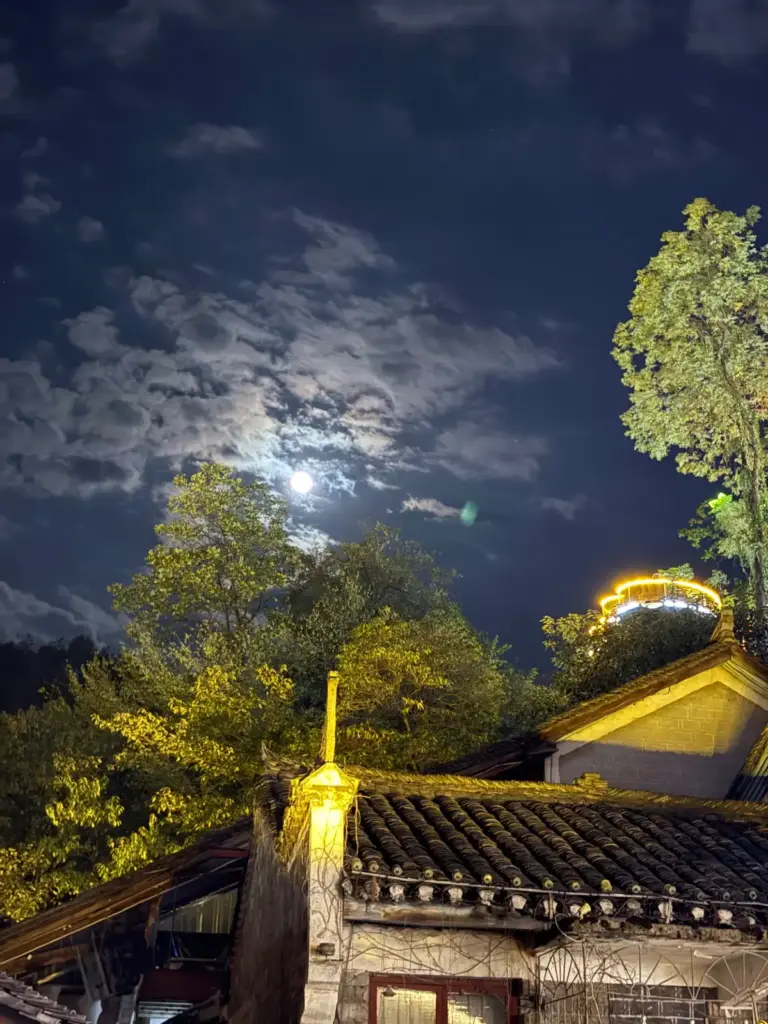
7:30 PM – 9:30 PM. The lanterns are fully lit, and the crowds have thinned slightly. Position yourself along the riverbank and capture the amber reflections shimmering on the dark water. A tripod is essential for sharp long-exposure shots.
📷 Best Composition Spots:
- From the Rainbow Bridge looking downstream: Classic stilted house panorama.
- The Jumping Stones: Fun, dynamic foreground element.
- From the South Gate looking north: Captures the river, bridges, and mountains in one frame.
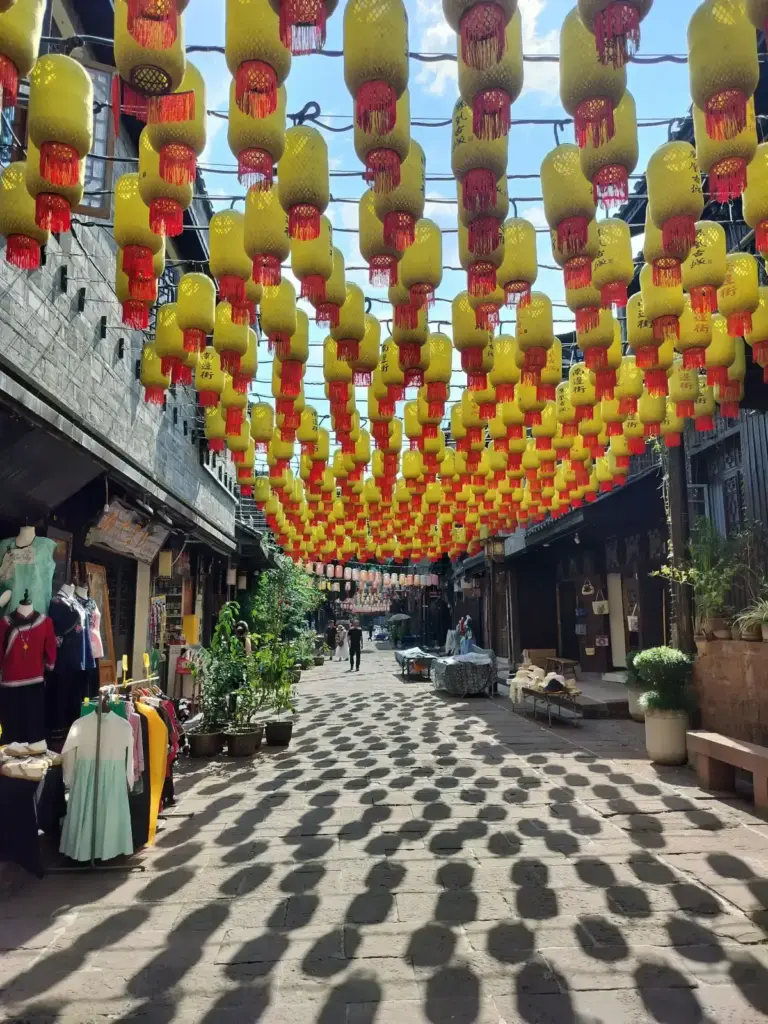
- The cobblestone alleys at dawn: Empty streets, soft light, hanging laundry.
💡 Practical Travel Tips for First-Time Visitors
👟 Wear Comfortable Shoes
The ancient town is built on uneven, centuries-old cobblestones. There are no smooth sidewalks. Leave the high heels and dress shoes at home. Bring well-broken-in walking shoes or sneakers with good grip.
💵 Cash and Mobile Payments
While larger hotels and restaurants accept credit cards, most small shops, street food vendors, and boat operators prefer cash or mobile payments (WeChat Pay / Alipay). Bring small bills and coins. If possible, set up Alipay on your phone before arriving in China.
🧳 Luggage Warning
Do NOT drag a large rolling suitcase into the ancient town. The cobblestones will destroy your wheels and your sanity. If you must bring a large bag, leave it at the train station luggage office or hire a local porter (called a “Bangbang”) to carry it to your hotel.
🗣️ Language Tips
Mandarin Chinese is spoken throughout the town. English is very limited outside of major hotels. Download a translation app (like Google Translate or Baidu Translate) with offline Chinese language packs. Learn a few basic phrases:
- Ni hao (你好) = Hello
- Xie xie (谢谢) = Thank you
- Duo shao qian? (多少钱?) = How much?
- Tai la le! (太辣了!) = Too spicy!
🌧️ Pack for the Weather
Xiangxi’s mountain climate is unpredictable. Even in summer, evenings can feel cool near the river. Bring layers, a rain jacket, and sun protection. In winter, pack warm, moisture-wicking layers as the damp cold can feel much colder than the thermometer suggests.
📱 Download Offline Maps
The narrow, winding alleys can confuse GPS signals. Download an offline map of Fenghuang before you arrive, or pick up a paper map from your hotel reception.
🎫 No Entrance Fee to Enter the Town
Remember: entering Fenghuang Ancient Town is completely FREE. There are no gates or main admission tickets. You only pay for specific internal attractions (like the historical residences) and activities (like the river cruise).
🗓️ Suggested Itineraries for First-Time Visitors
⚡ The Express 1-Day Itinerary
For travelers on a tight schedule or passing through as part of a Zhangjiajie combo trip.
- 7:00 AM: Arrive, walk the riverfront, cross the jumping stones. 🪨
- 9:00 AM: Explore the inner alleys, visit Shen Congwen’s Former Residence. 📚
- 12:00 PM: Riverside lunch – try Blood Duck and Sour Fish Soup. 🍲
- 2:00 PM: Tuojiang River boat ride. 🛶
- 4:00 PM: Rent a Miao costume for photos, browse craft shops. 👘
- 6:00 PM: Watch the sunset from the Rainbow Bridge. 🌇
- 7:30 PM: Night walk – lanterns, reflections, night market snacks. 🏮
🌙 The Classic 2-Day Itinerary
The recommended experience for first-time visitors.
- Day 1: Follow the 1-day itinerary above. Stay overnight in a riverside guesthouse. 🏨
- Day 2, 6:00 AM: Wake up for the morning mist photography session. 🌫️
- Day 2, 8:00 AM: Breakfast, then explore sites you missed (Xiong Xiling Residence, city walls). 🏰
- Day 2, 11:00 AM: Hike to Nanhuashan viewpoint or visit Qiliang Cave. 🌳
- Day 2, 2:00 PM: Farewell lunch, final souvenir shopping, depart. 🚶
🌿 The Deep-Dive 3-Day Itinerary
For photographers, culture enthusiasts, and slow travelers.
- Days 1 & 2: As above.
- Day 3: Take a day trip to Furong Town (the ancient town built over a waterfall) or visit a Miao ethnic minority village in the surrounding mountains for a deeper cultural immersion. 🏘️
❓ Frequently Asked Questions (FAQ)
Q: Is Fenghuang Ancient Town safe for tourists? A: Yes, Fenghuang is very safe. Violent crime is extremely rare. Standard travel precautions apply (watch your belongings in crowded areas), but you can comfortably walk the streets at any hour.
Q: Can I visit Fenghuang with children? A: Absolutely! Kids love the jumping stones, the boat rides, the costume rentals, and the night market snacks. Just be mindful of the uneven cobblestones and keep a close eye on little ones near the river.
Q: Is Fenghuang wheelchair or stroller accessible? A: Unfortunately, no. The ancient town is built on uneven cobblestones with many stairs and high thresholds. The jumping stones and old bridges are not suitable for wheelchairs or strollers.
Q: Do I need a guide to explore Fenghuang? A: No. The town is very walkable and easy to navigate on your own. However, if you’re deeply interested in history and culture, hiring a local guide for a half-day can add rich context to the museums and historical sites.
Q: How far is Fenghuang from Zhangjiajie? A: The high-speed train connects Zhangjiajie West Station to Fenghuang Gucheng Station in approximately 1 hour. By road, it takes about 3.5 to 4 hours.
Q: Is Fenghuang very touristy? A: Yes, especially during Chinese national holidays and summer weekends. However, if you visit during the shoulder season (spring or autumn) and explore the inner alleys early in the morning, you can still find quiet, authentic moments.
Q: What should I buy as souvenirs? A: Miao silver jewelry, handmade batik fabric, local Xiangxi tea, smoked meats, and small woodcarvings are all excellent, authentic choices.
🌟 Final Thoughts: Why Fenghuang Deserves a Place on Your Travel List
In a country of towering skyscrapers, bullet trains, and sprawling megacities, Fenghuang Ancient Town is a precious reminder of what China looked like, felt like, and sounded like centuries ago. It is a place where the past is not locked behind glass in a museum but lives and breathes in the wooden beams of the stilted houses, in the rhythm of the Tuojiang River, in the silver headdresses of the Miao women, and in the pages of Shen Congwen’s timeless novel.
Whether you come for one whirlwind day or linger for a week of slow mornings and misty evenings, Fenghuang will leave an impression that lingers long after you’ve left the mountains of Xiangxi behind.
This is not just a town. It is a feeling. A mood. A poem written in wood, water, and mist.
Pack your walking shoes, charge your camera, open your heart, and come discover Phoenix City for yourself. 🏮🐉✨
The mist is waiting. The lanterns are ready. The river is calling. 🌫️🏮🌊
Comentarios